- Shade without losing the deck
- Anchored for Illinois wind and snow
- Lighting and fans planned in
- Matches the deck it sits on
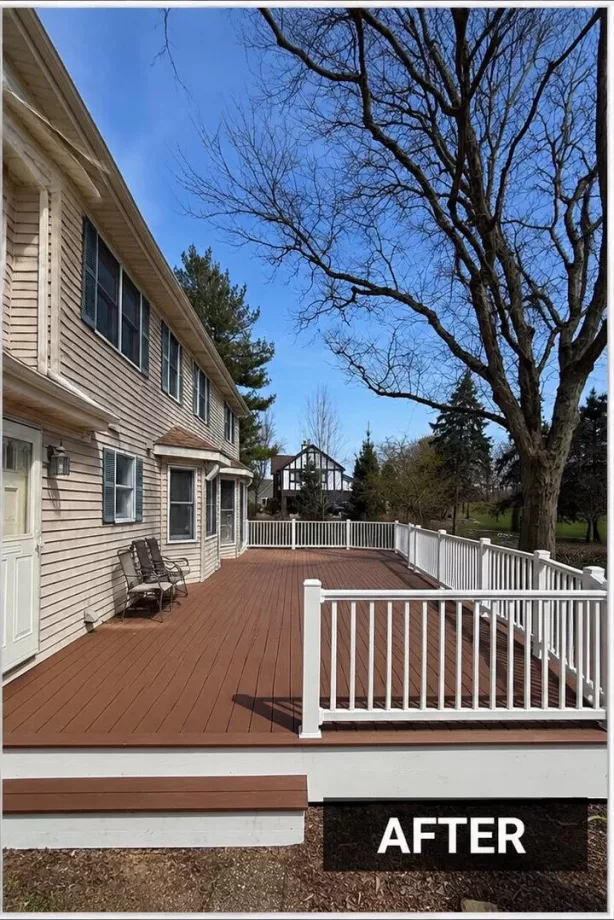
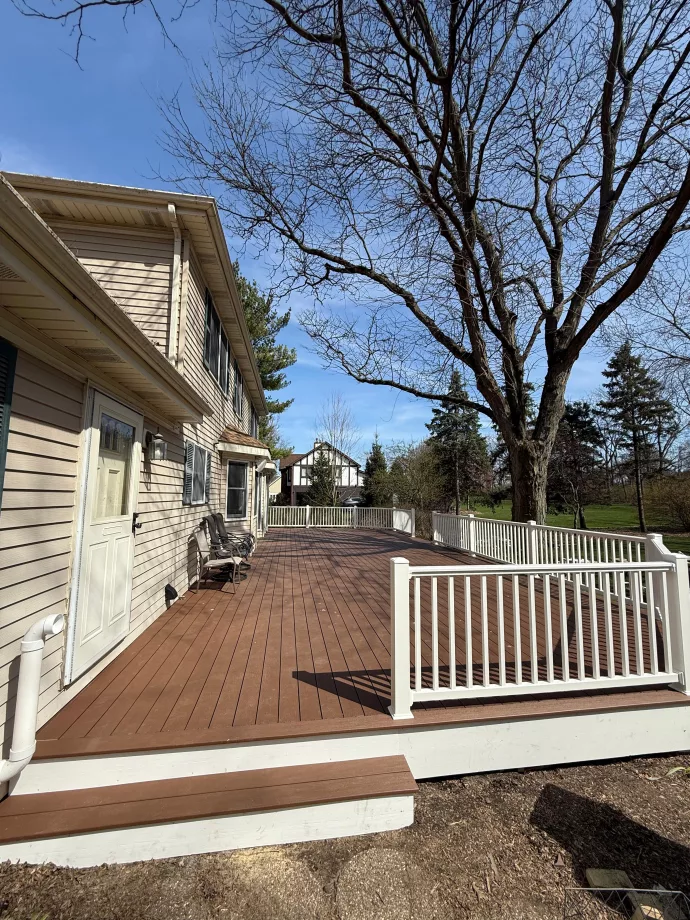
A deck that faces west is a deck nobody sits on in July. A pergola fixes that, and a covered deck goes further and makes the space usable in rain. Osnova Construction builds both across Naperville, Wheaton, Glendale Heights, St. Charles and the rest of the western suburbs, on decks we build and on decks that are already there.
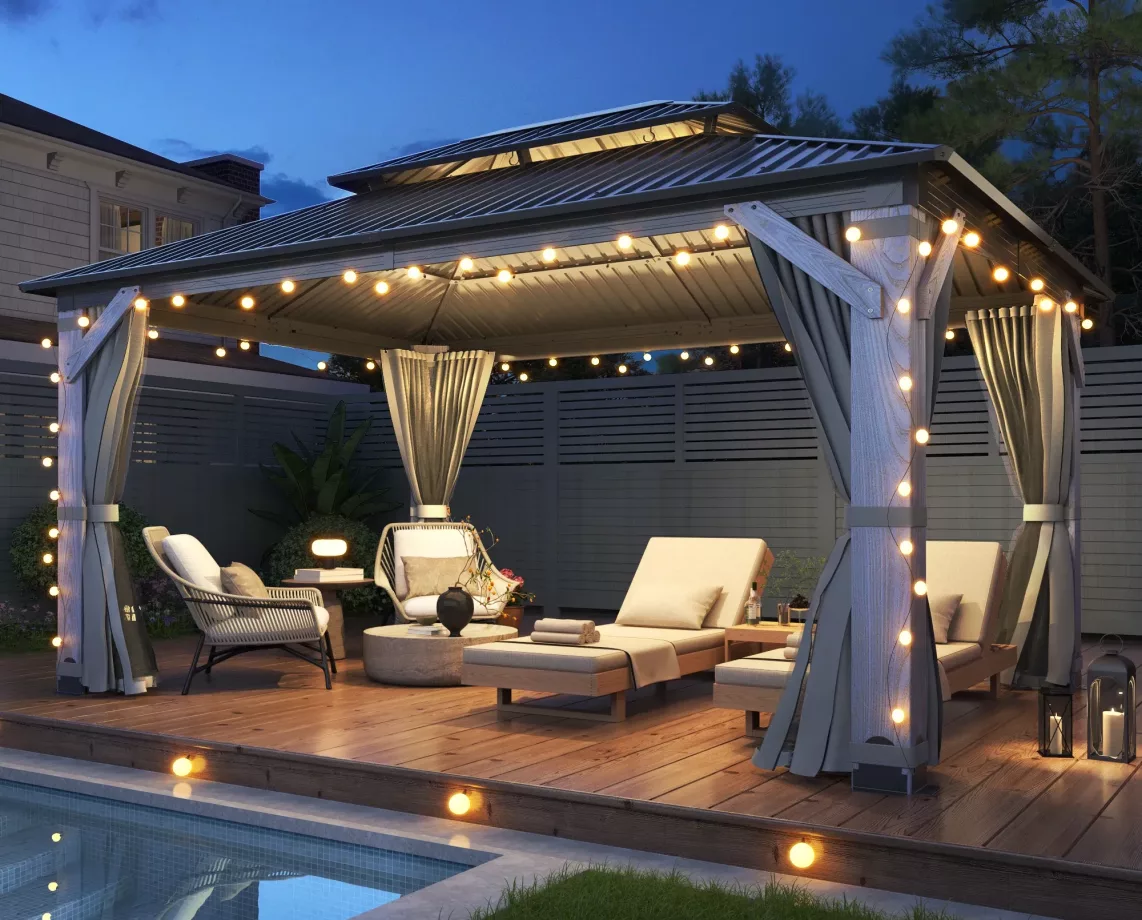
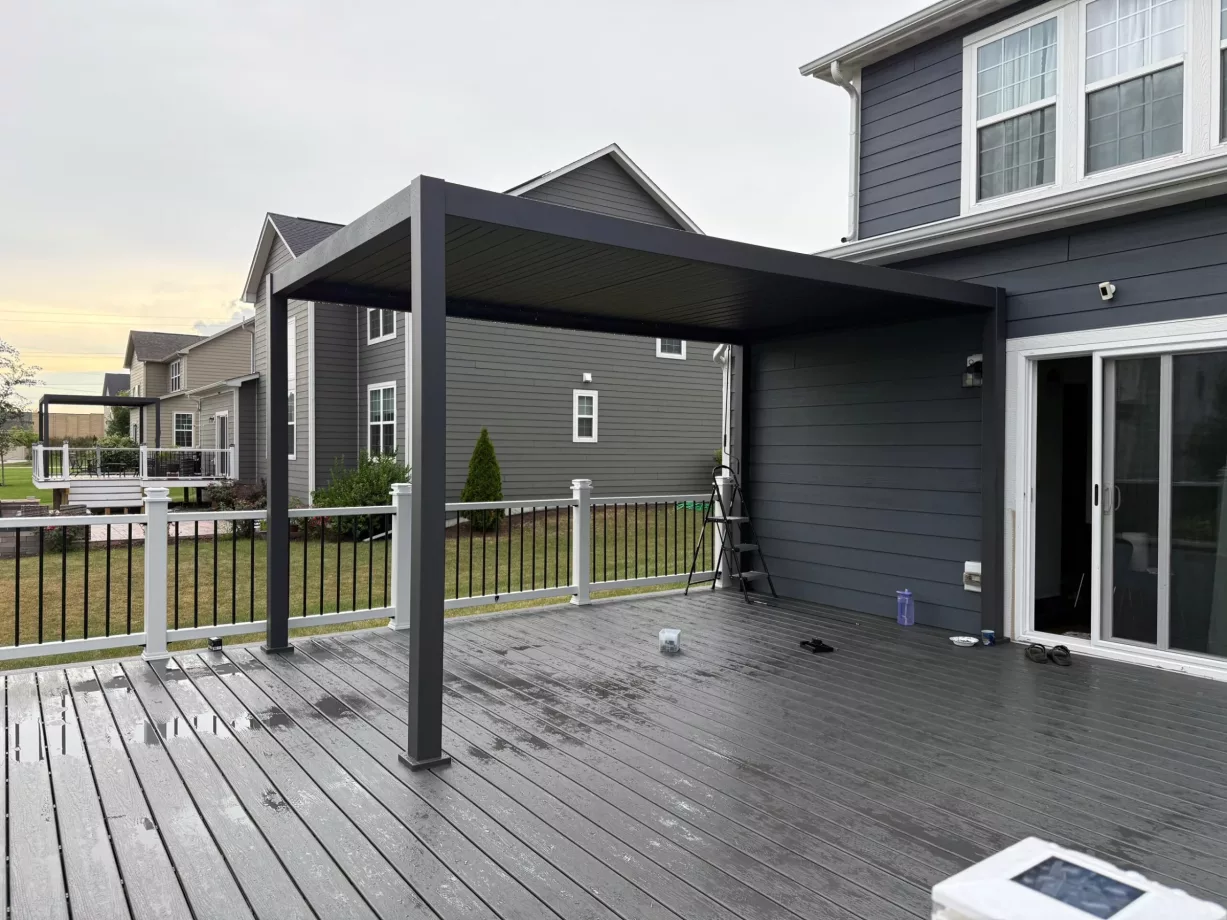
The black aluminum pergola over the Naperville composite deck in our gallery is what most clients ask for, and the free consultation is where we work out whether yours attaches to the house or stands alone, what your village requires, and what it costs, itemized. Request a free estimate.
We build pergolas as structures, not as furniture. The posts sit on footings or on hardware tied into the deck's beams, the beams are sized for snow, and the whole thing is anchored for the kind of wind that comes across a DuPage subdivision in April. A pergola that is bolted to deck boards is the one you find in the neighbor's yard after a storm.
What an Osnova pergola comes with
- Footings or beam-tied posts, anchored for DuPage wind and snow loads, not screwed to deck boards.
- The permit question answered before you decide, and filed by us if your village needs one.
- Lighting and a fan wired in where you want them, not bolted on afterward.
- Licensed, insured, written workmanship warranty, the same as on the deck under it.
What we build
- Aluminum pergolas: powder-coated, usually black or bronze, no maintenance, and the base for a motorized louvered roof if you want one. The pergola we build most, and the natural match for a composite deck.
- Cedar pergolas: the classic look, built from 6x6 posts and doubled beams, stained to match or left to silver. Needs the same care as a cedar deck.
- Composite and PVC-wrapped pergolas: the wood look with the aluminum maintenance, from the same brands as the decking.
- Louvered roofs: adjustable slats that open for sun and close against rain, manual or motorized.
- Covered decks: a solid roof, shingled or metal, tied into the house or freestanding, with gutters so the rain goes where you want it.
Attached or freestanding
An attached pergola ties into the house with a ledger, which keeps the posts on one side and the look clean. It also needs a permit nearly everywhere and must be flashed as carefully as a deck ledger. A freestanding pergola stands on four or six posts, goes anywhere on the deck or the lawn, and often needs no permit. We will tell you which your village requires before you decide.
Planning it in
The best time to build a pergola is while the deck is being built: the footings go in together, the posts can be wrapped into the railing line, and wiring for lights and a fan runs inside the frame. If you are planning a new deck and think you might want shade later, tell us now and we will at least set the footings.
On an existing deck
Most of our pergola work is on decks that already exist. We check the frame and the footings under the proposed posts and either tie into the beams or pour new footings beside the deck. If the deck itself is on its way out, it is worth reading about deck replacement before adding a structure to it.
Timeline
A freestanding aluminum pergola on an existing deck is typically two to three days. Cedar and attached pergolas run about a week with the permit. Covered decks take longer and we scope them individually.
Want to know what shade would cost over your deck? Request a free estimate. A photo of the deck from the yard, with the afternoon sun in it, is enough for a first opinion on size and placement: Send us a photo.
- Consultation on sun, size and material
- Drawing and proposal
- Permit where the village requires one
- Footings or post mounts, then structure
- Roof, lighting, walk-through
Yes, in virtually every jurisdiction here. We pull the permits and handle inspections as part of every project, so you don't have to.
Yes. Every project is backed by a written workmanship warranty, on top of the manufacturer warranties for materials we install.