Part of New Deck Construction
- Old ledger damage found and fixed
- Brought up to current code
- Nothing reused that should not be
- Usually done inside two weeks
Most of the decks we replace were built in the 1990s and early 2000s, when subdivisions across Naperville, Aurora, West Chicago and Wheaton went up by the thousand and the deck was the last thing on the punch list. Twenty-five years of freeze-thaw later, the ledger is rotting behind an unflashed board, the posts are sitting on patio blocks, and the railing moves when you lean on it. Osnova Construction takes those decks down and builds what should have been there.
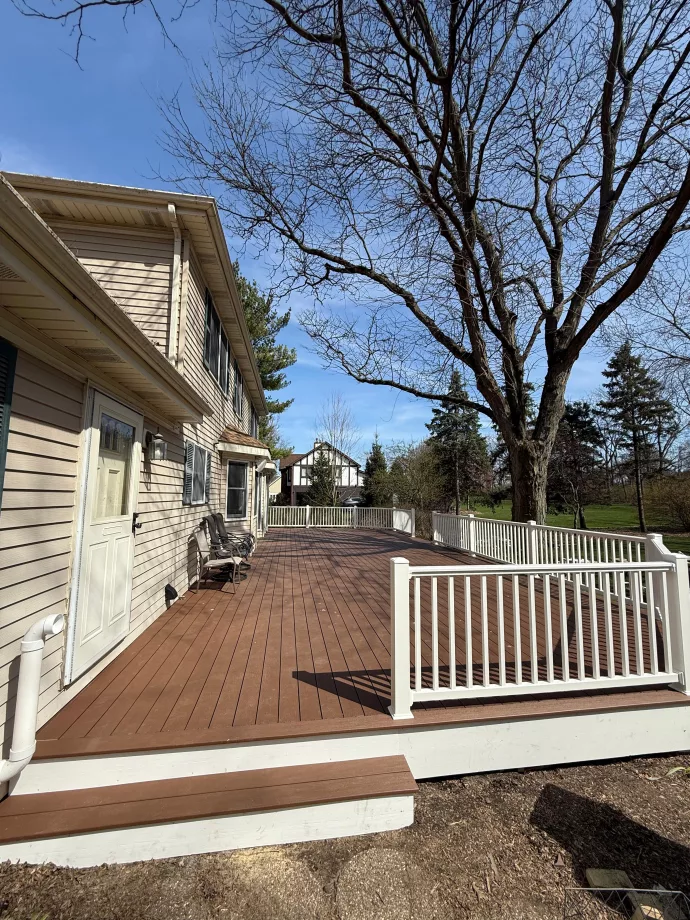
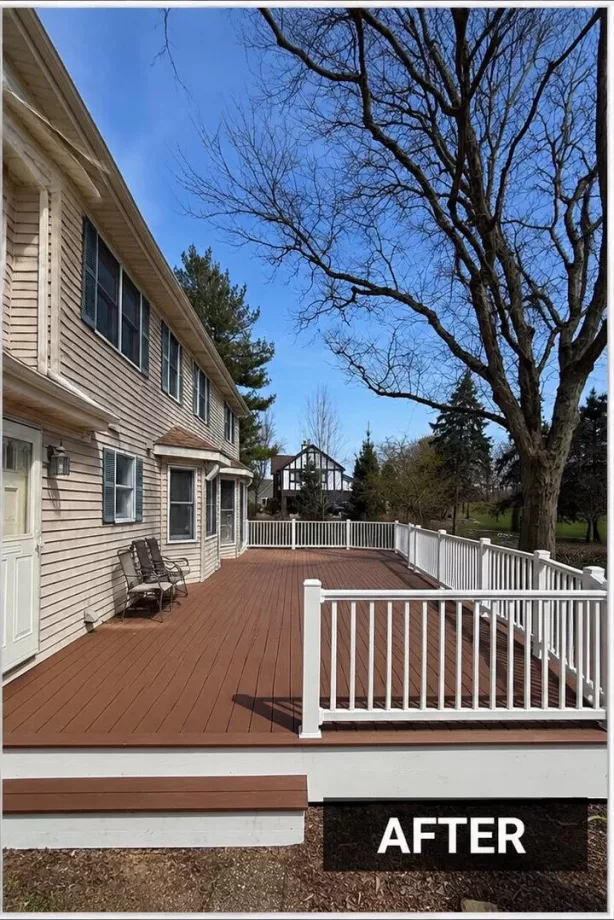
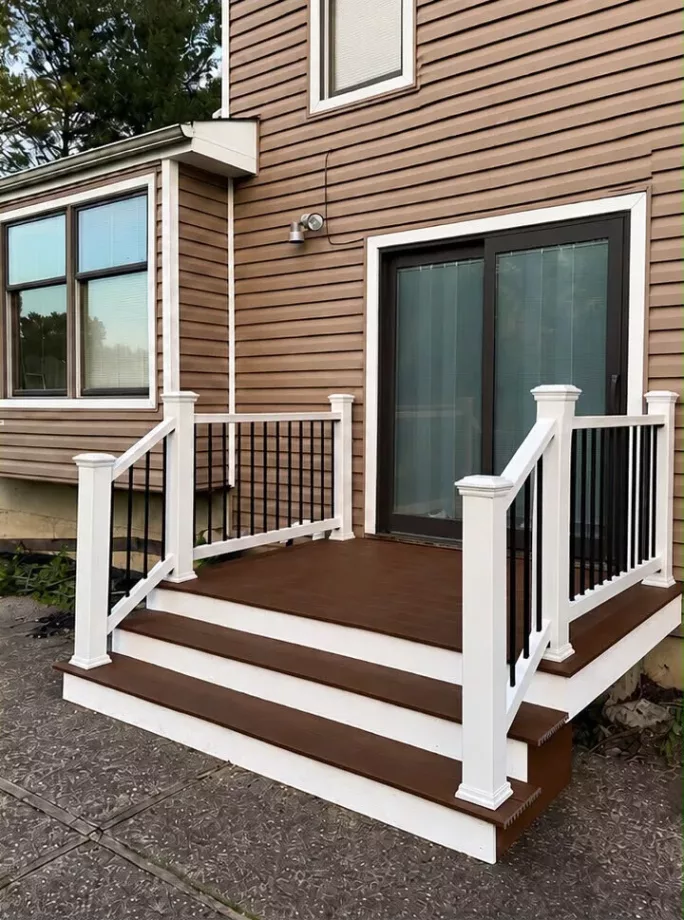
Two of the decks in our gallery are replacements in West Chicago: a small, splintering wood deck that became brown composite with black aluminum balusters, and the frame-and-ledger job behind it. The free estimate for yours includes the inspection behind the ledger, a drawing of the new deck and an itemized price with demolition on it. Request a free estimate.
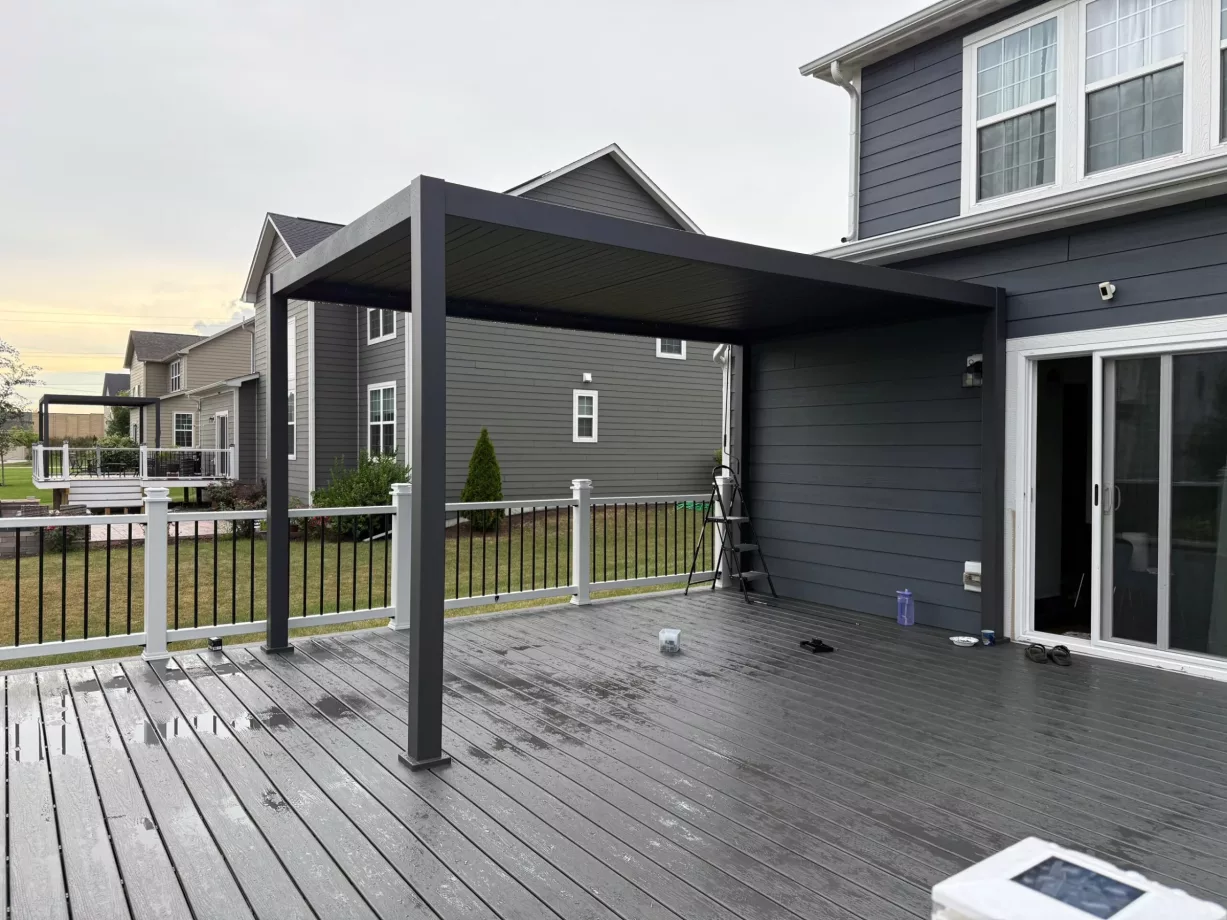
A replacement is priced and permitted like a new build; the difference is the tear-out, which is a day's work and a modest line on the proposal. So the real question is never "replace or not", it is what the new deck should be. Same footprint in composite is the common answer. A bigger deck, a second level, or a pergola built in are all easier to add now than later.
What a replacement from Osnova includes
- Demolition and haul-away, treated lumber included, priced on the proposal rather than added later.
- New footings below frost, new frame, new ledger flashing, all inspected by your village.
- Composite or wood decking and code-compliant railing, your choice, with samples at the consultation.
- Licensed and insured, written workmanship warranty, our own crew for the whole job.
- Usually done inside two weeks of the permit clearing.
What we check before we quote
Every replacement estimate starts at the wall. We pull a board or two near the ledger and look at the rim joist and the wall behind it, because an unflashed ledger leaks into the house for years before anyone notices. If there is rot in the wall, it goes in the proposal now rather than as a surprise on demolition day.
What gets reused
Usually nothing structural. Footings on older decks are almost always too shallow for the 42-inch frost depth villages now enforce, and a frame that has spent two decades outdoors has hidden rot at every connection. Occasionally a sound set of stairs or a recent railing is worth keeping, and we will say so. Reusing a bad frame under new composite is the most expensive mistake in decking, because the boards outlast what is under them by twenty years.
How a replacement goes
- Inspection and consultation. Old deck, wall behind it, grade, drainage. Board and railing samples for the new one.
- Drawing and proposal. Itemized, demolition included.
- Permit. Filed with your village; inspections scheduled around the build.
- Demolition. One day, hauled away.
- New deck. Footings, inspection, frame, inspection, decking, railing, stairs.
- Walk-through. Punch list closed, warranty and registrations handed over.
Start to finish, most replacements are done inside two weeks of the permit clearing.
Composite or wood for the replacement
Nearly everyone replacing a wood deck that failed chooses composite for the new one; nobody wants to stain a deck twice. If the budget is tight or the look matters more, a cedar deck on a properly built frame will last far longer than the one it replaces.
Not sure the frame is that far gone? Two photos, the ledger and a post base, are enough for a first opinion, usually the same day. Send us a photo. Already know it has to go? Request a free estimate and we will come out with samples.
- Inspect the old deck and the wall behind it
- Drawing and itemized proposal
- Permit and demolition
- New footings, frame, decking, railing
- Walk-through and warranty
Usually not recommended — old framing often doesn't meet current code and you can't inspect what's underneath. We typically recommend a tear-out and proper rebuild; demo is a small fraction of total project cost.
Most residential decks take 1–3 weeks of active construction once permits are issued. Larger or multi-level builds can run 4–6 weeks.