Part of New Deck Construction
- No staining, ever
- Holds up to freeze-thaw and humidity
- Cooler underfoot in lighter colors
- Samples in hand before you choose
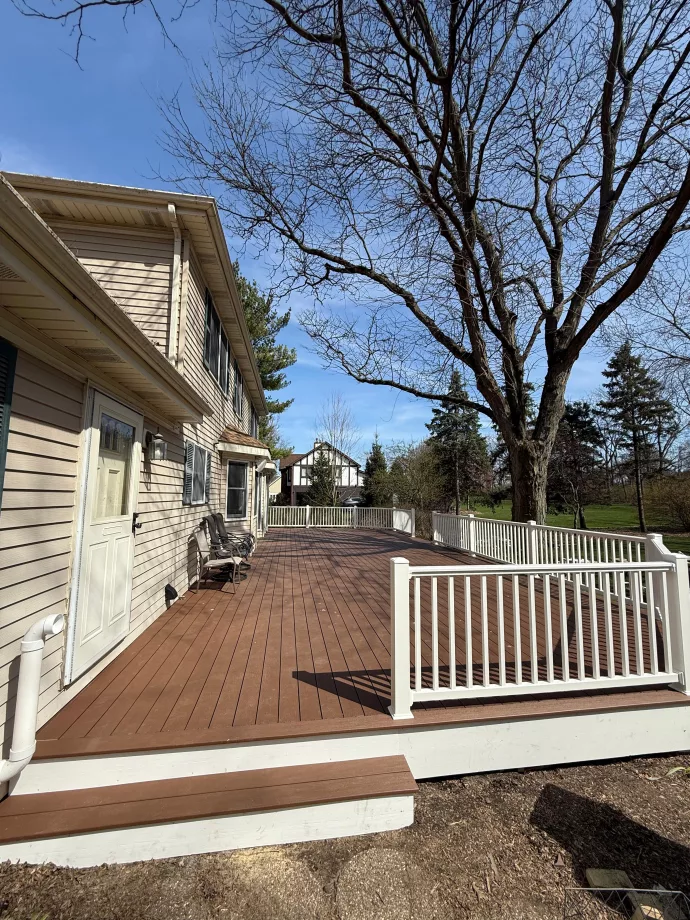
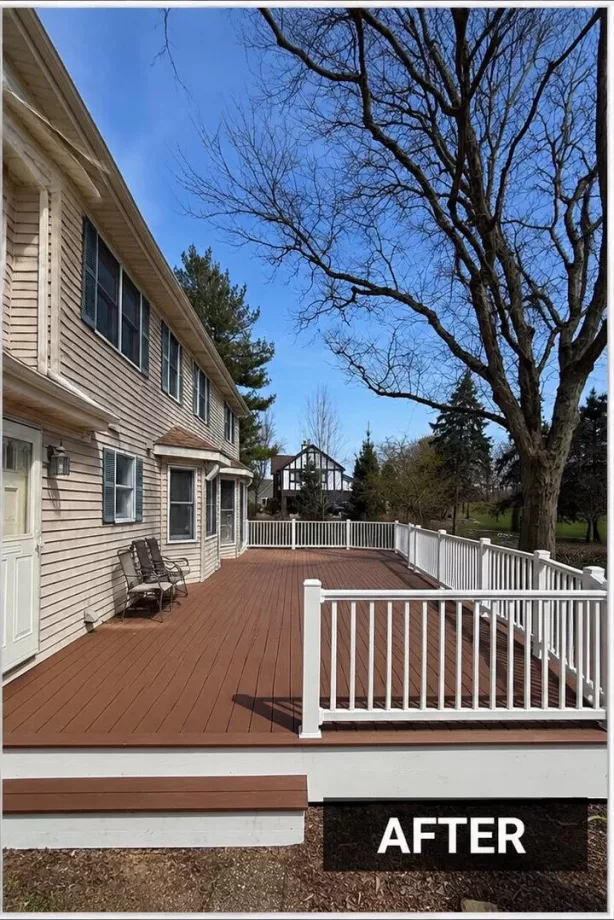
Composite is the material most of our clients end up choosing, and for a Chicago-area deck it is hard to argue with: no staining, no splinters, no gray-out by year three, and a board that does not care whether January is wet or dry. Osnova Construction builds composite decks with TimberTech, Trex and Fiberon across Naperville, Wheaton, Glen Ellyn, Aurora and the rest of DuPage and Kane counties.
Every consultation comes with TimberTech, Trex and Fiberon boards you can hold, a scaled drawing and an itemized quote. Free, on site, no obligation. Request a free estimate.
What composite does not do is forgive a bad frame. The boards flex more than wood, so the joists underneath need to be closer together, the footings need to be below frost, and the fasteners need to be the hidden clips the manufacturer specifies. We build the whole system, which is how the material warranty stays valid.
What you get with an Osnova composite deck
- The frame the warranty needs: joists at 16 inches, footings below the 42-inch frost line, the manufacturer's hidden clips. Skip any of those and the 25-year board warranty is void.
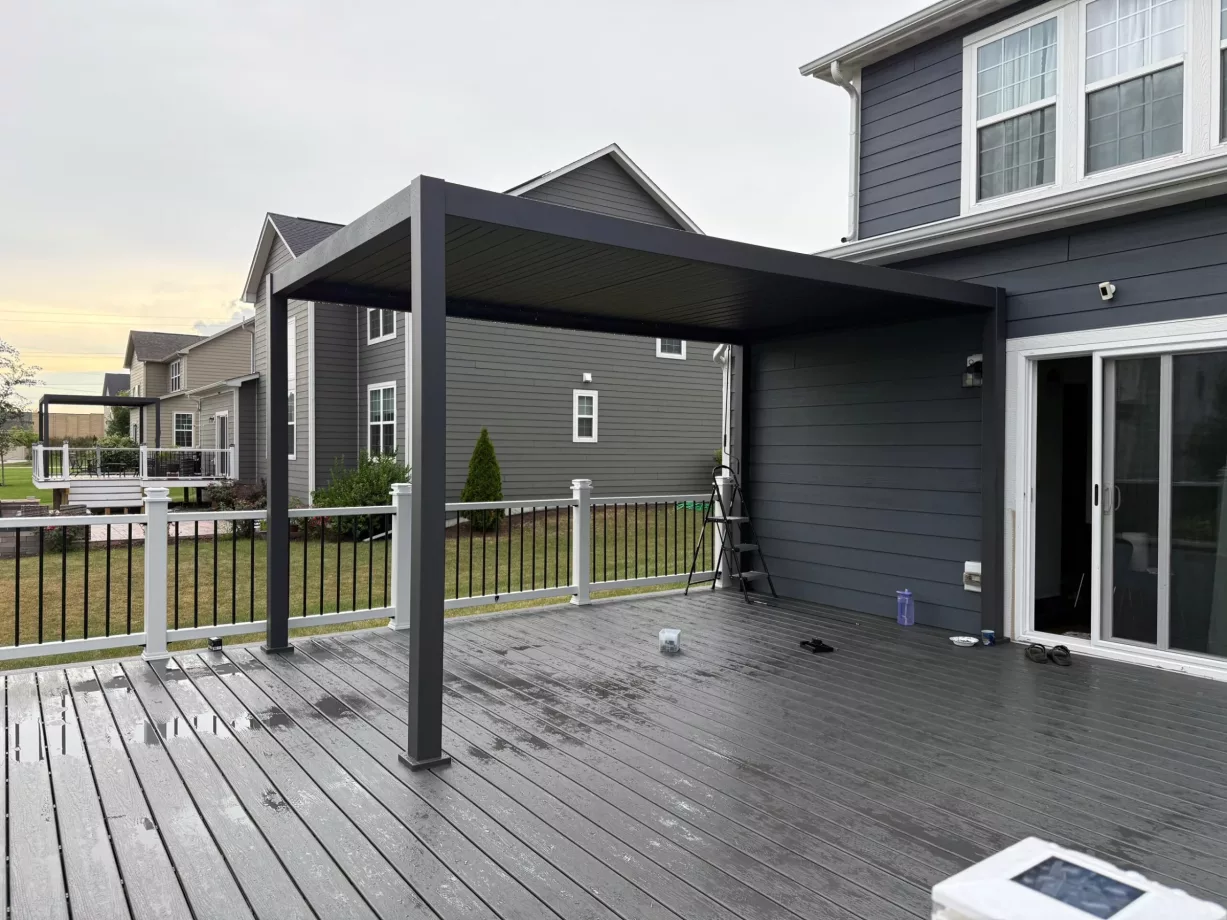
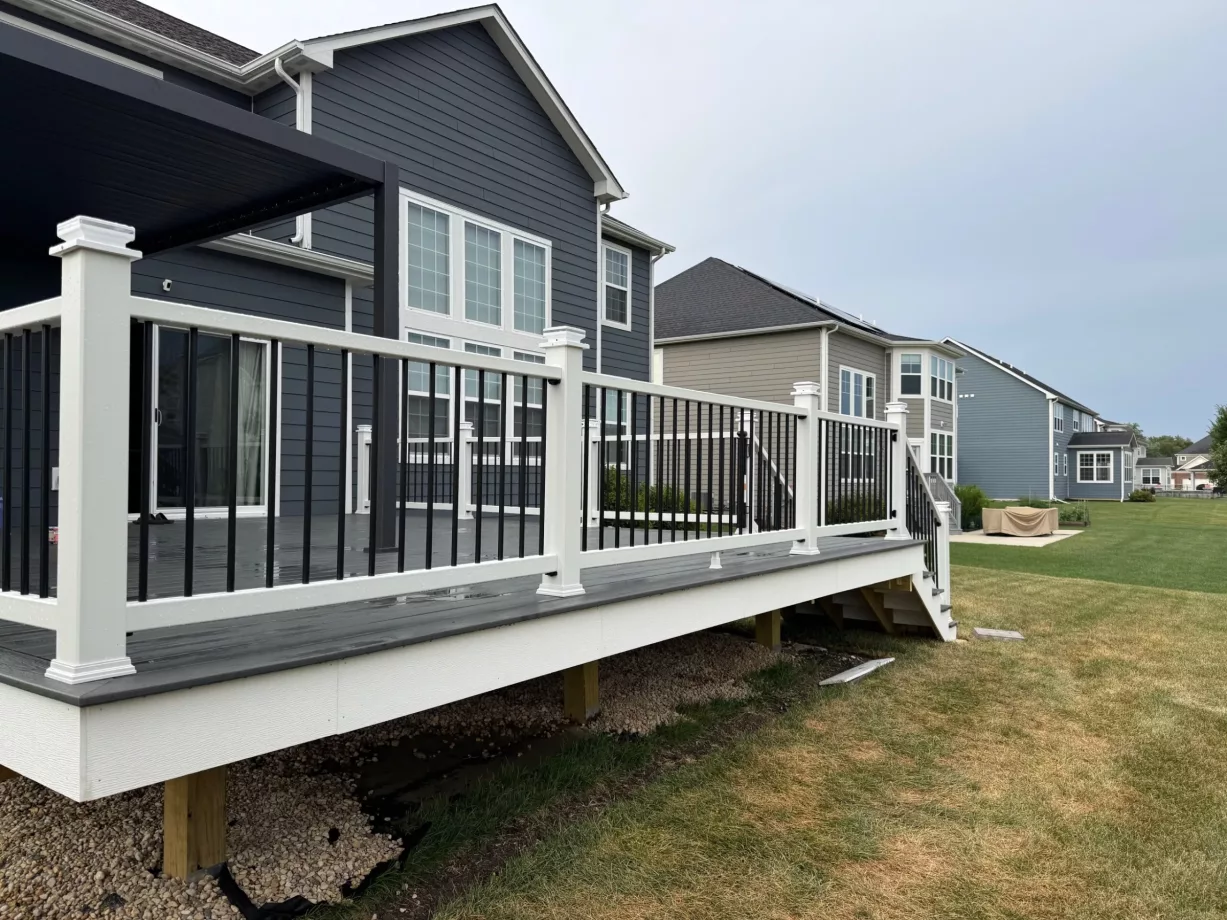
- A crew that has built this exact deck before: the Naperville composite deck with the black aluminum pergola in our gallery is ours, start to finish.
- Written workmanship warranty on top of the brand's, from a licensed and insured Illinois contractor.
- A price you can compare: we quote all three brands on the same footprint if you ask.
The three brands we install
- TimberTech (AZEK): the widest color range and the most convincing wood grain in its top lines, plus a PVC line for pool decks.
- Trex: the name most people know, three tiers from value to premium, and a strong hidden-fastener system.
- Fiberon: often the best price for a capped board, with a good mid-range that photographs well.
We are not tied to one supplier's stock. If you already have a board in mind, we price it; if not, we bring samples from all three to the consultation.
What "capped" means and why it matters
Early composite from the 2000s was uncapped: wood fiber exposed at the surface, which soaked up water, grew mildew and faded unevenly. Every board we install today has a polymer cap bonded over the core, on three or four sides. The cap is what resists stains, scratches and fading. Ask any deck that turned splotchy after five years and it was almost certainly an uncapped board.
Railing that matches
A composite deck with a pressure-treated wood railing looks unfinished within a year. We pair the boards with composite railing from the same brand, or with black aluminum, which reads as almost invisible against a lawn and never needs paint. Glass and cable are options where the view is the point. Details on the railings page.
How long a composite deck takes
A typical 300 to 400 square foot deck runs about two weeks on site once the permit is in hand, footing inspection included. Composite installs a little slower than wood because every board goes on with clips and the cuts need a finer blade, and it is worth the extra day.
Already have a deck and only want the surface changed? That is a resurfacing job: see deck repair & remodeling. Starting from bare ground, or replacing something rotten? Deck replacement covers the tear-out.
Want to see the three brands side by side in your own backyard? Request a free estimate. Not ready for a visit yet? Send us a photo of the space and we will tell you which line fits it and roughly how the brands compare.
- Consultation with board samples
- Brand and color locked in the proposal
- Permit and frost footings
- Frame, decking, railing
- Walk-through and registrations
For most homeowners, capped composite is the sweet spot — it handles freeze-thaw cycles, humidity, and UV without splintering or needing annual staining.
Yes. Every project is backed by a written workmanship warranty, on top of the manufacturer warranties for materials we install.
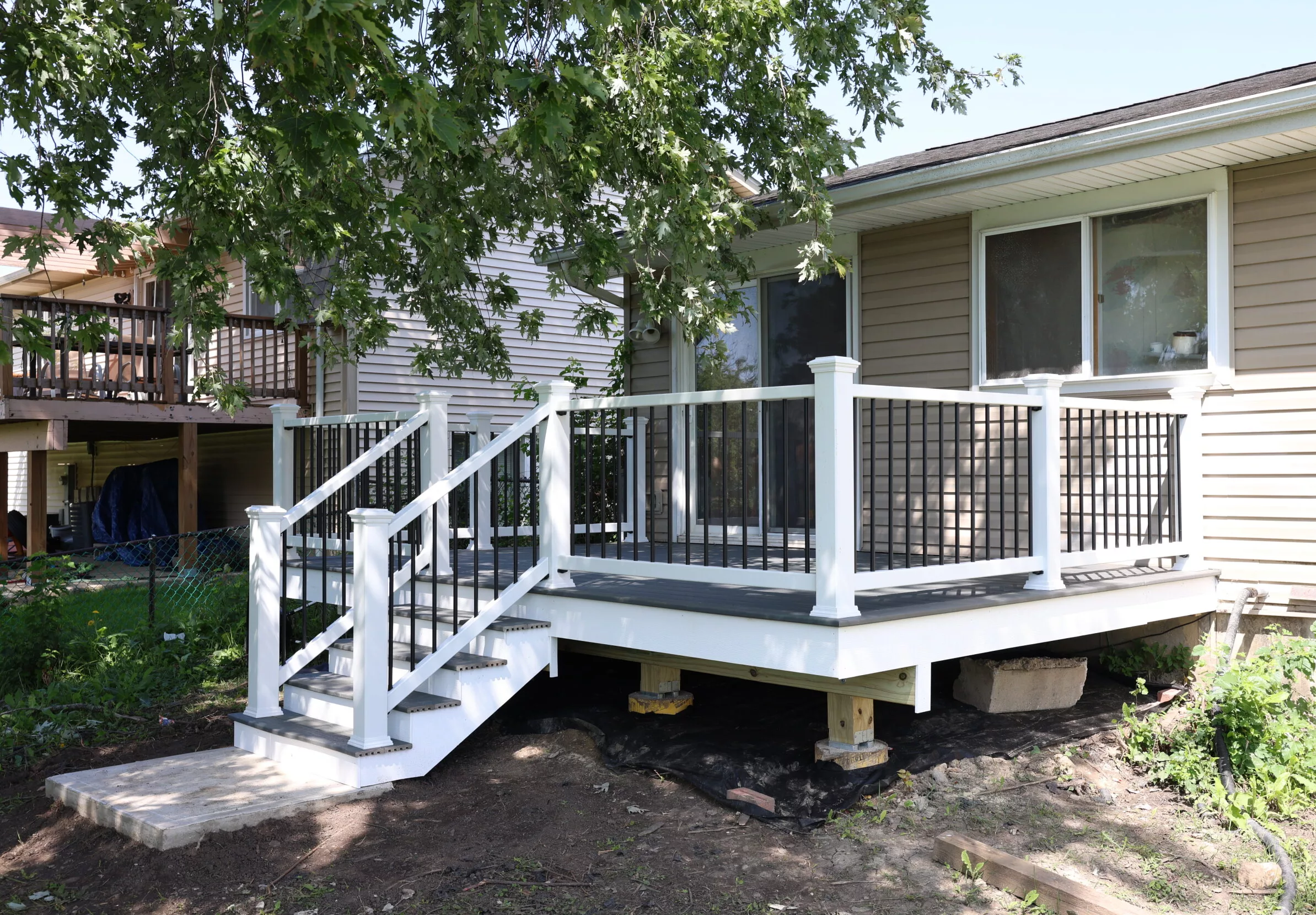
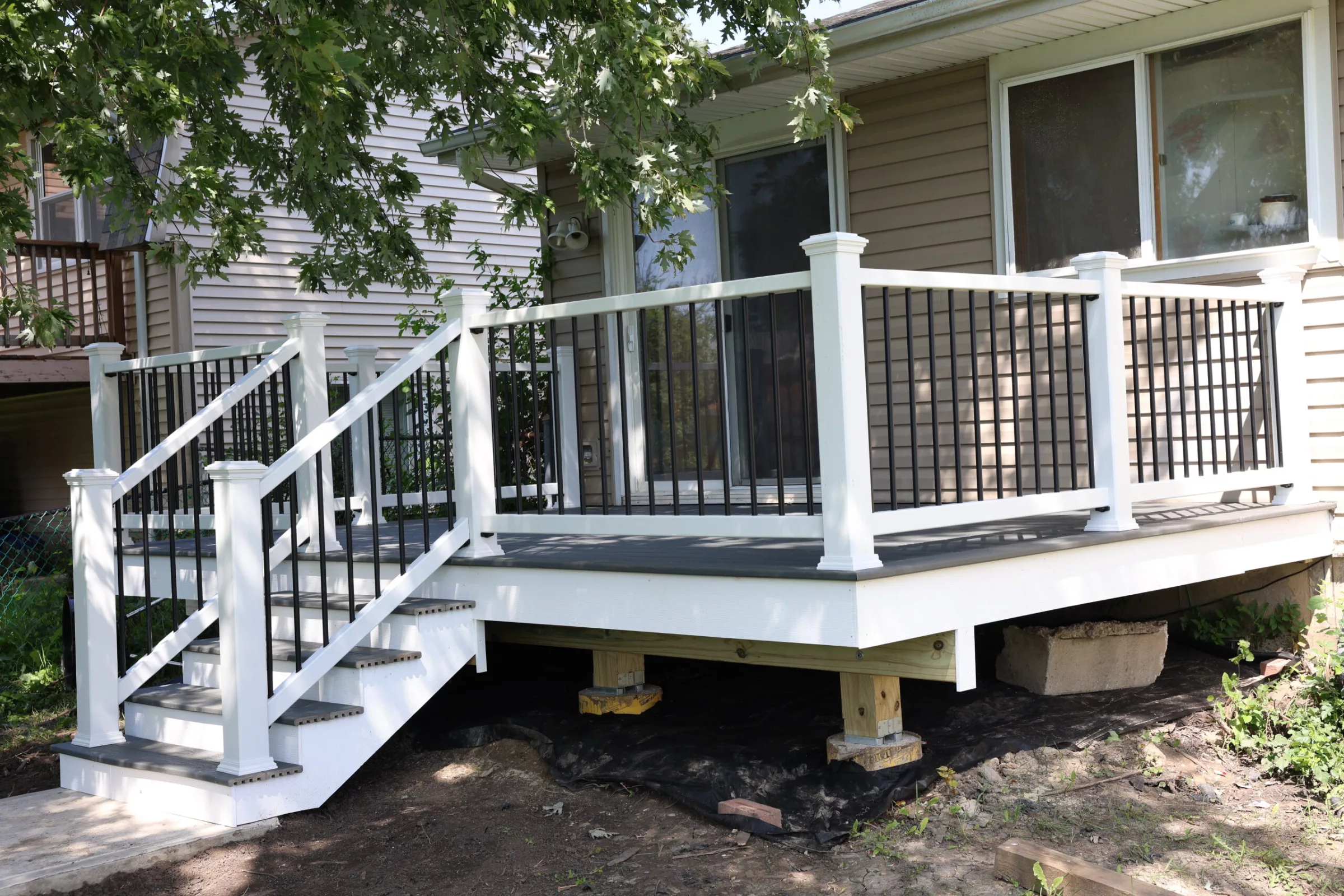
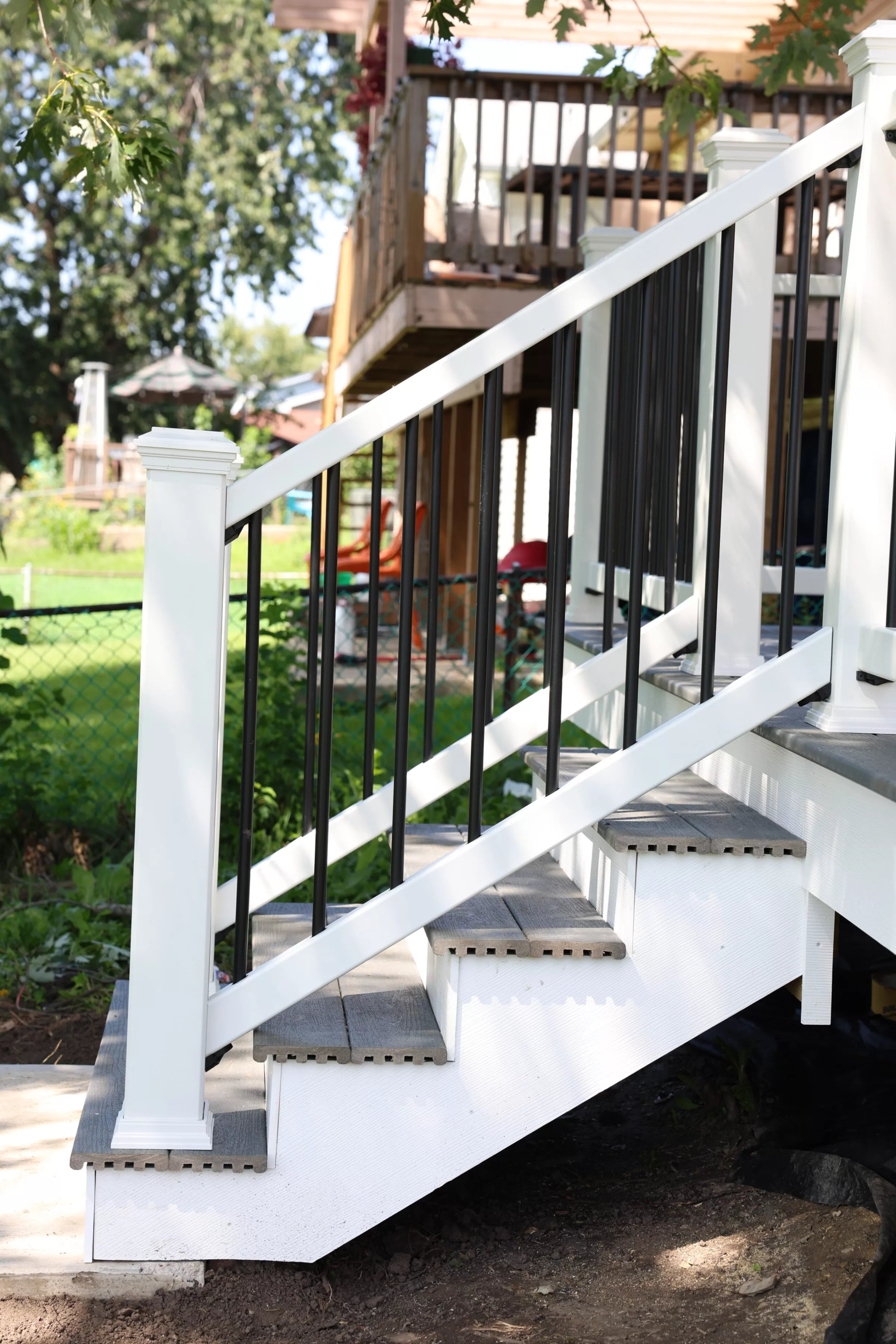
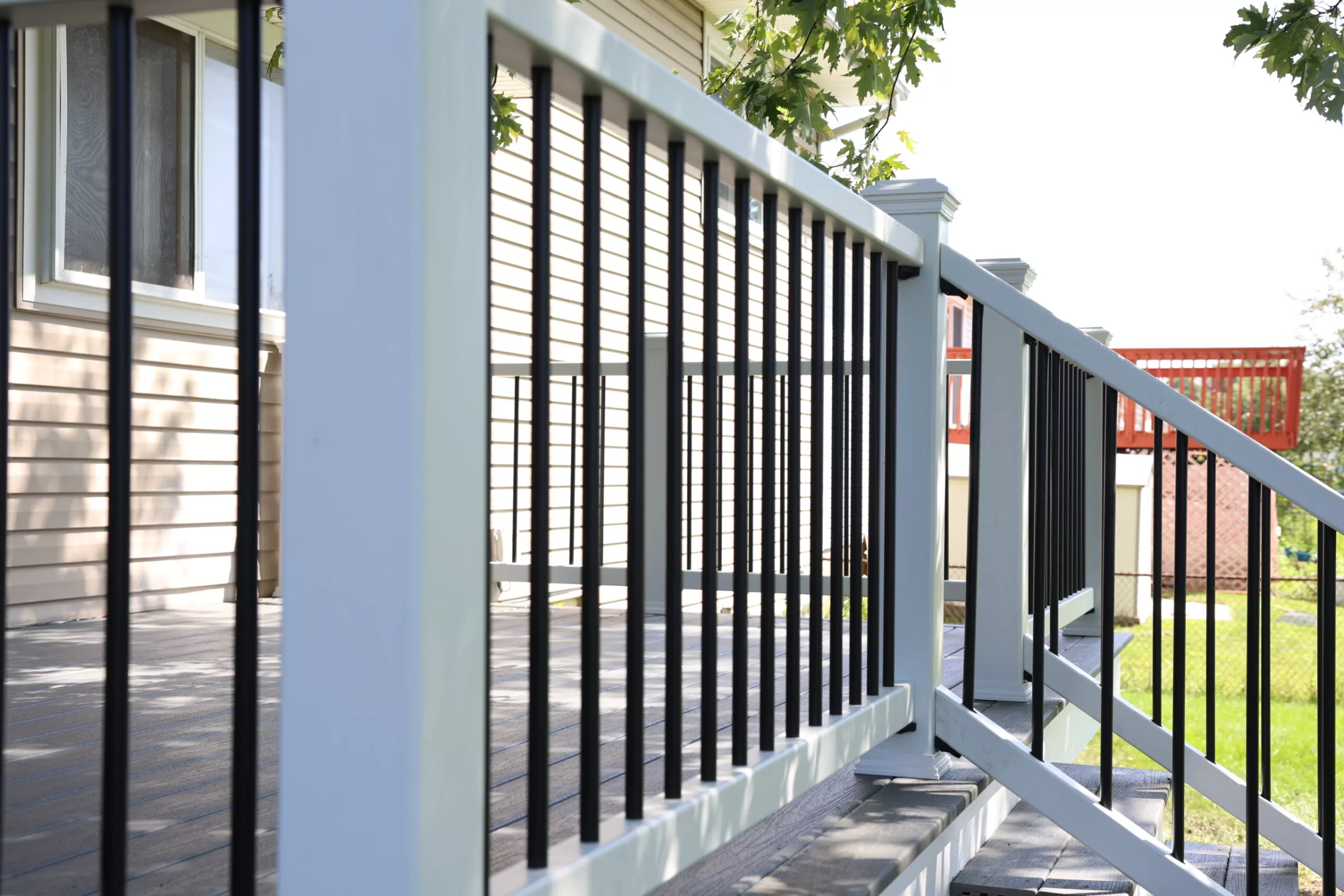
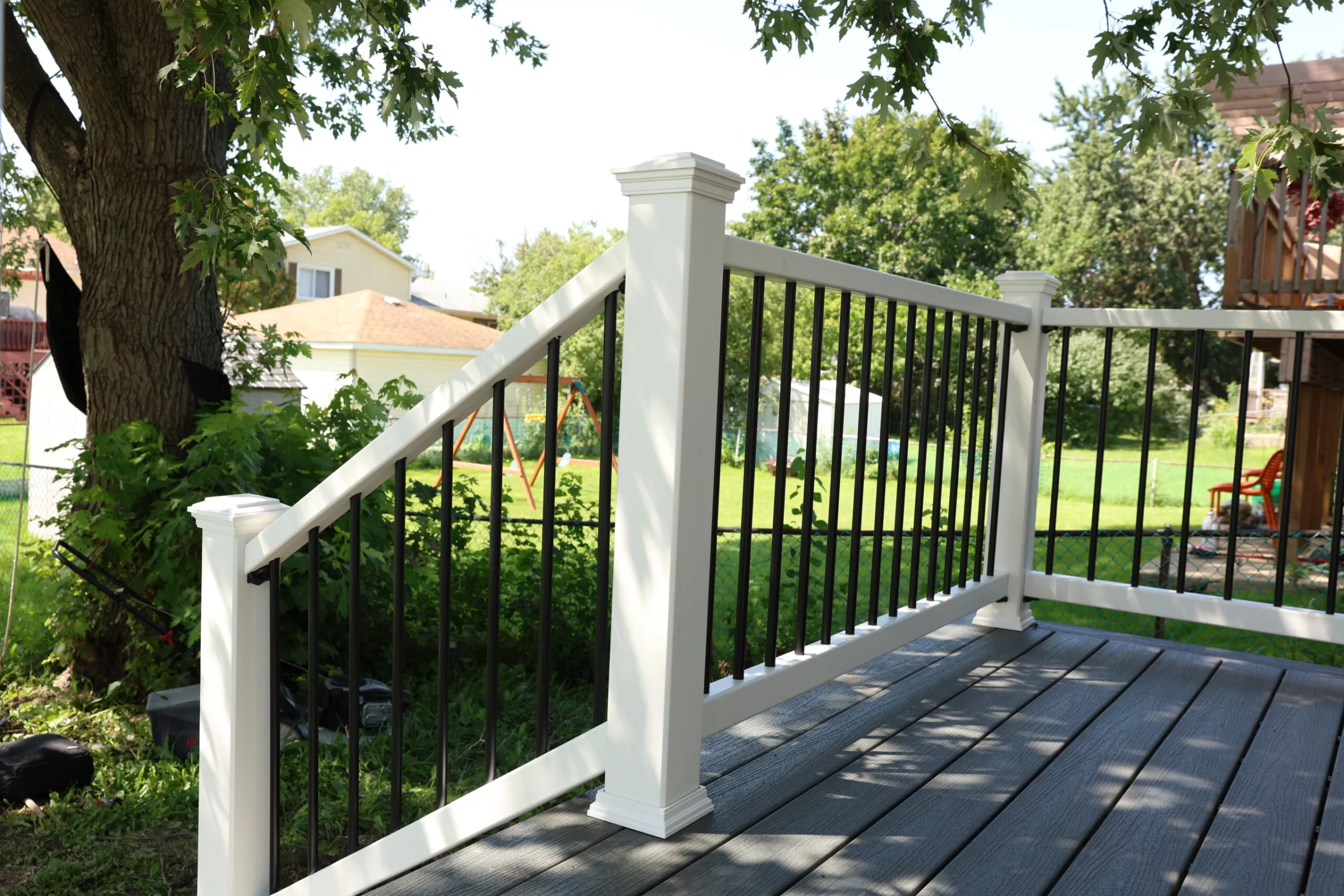
New Composite Deck Construction
Completed: August 2026
Glendale Heights, Illinois View project Read more about New Composite Deck Construction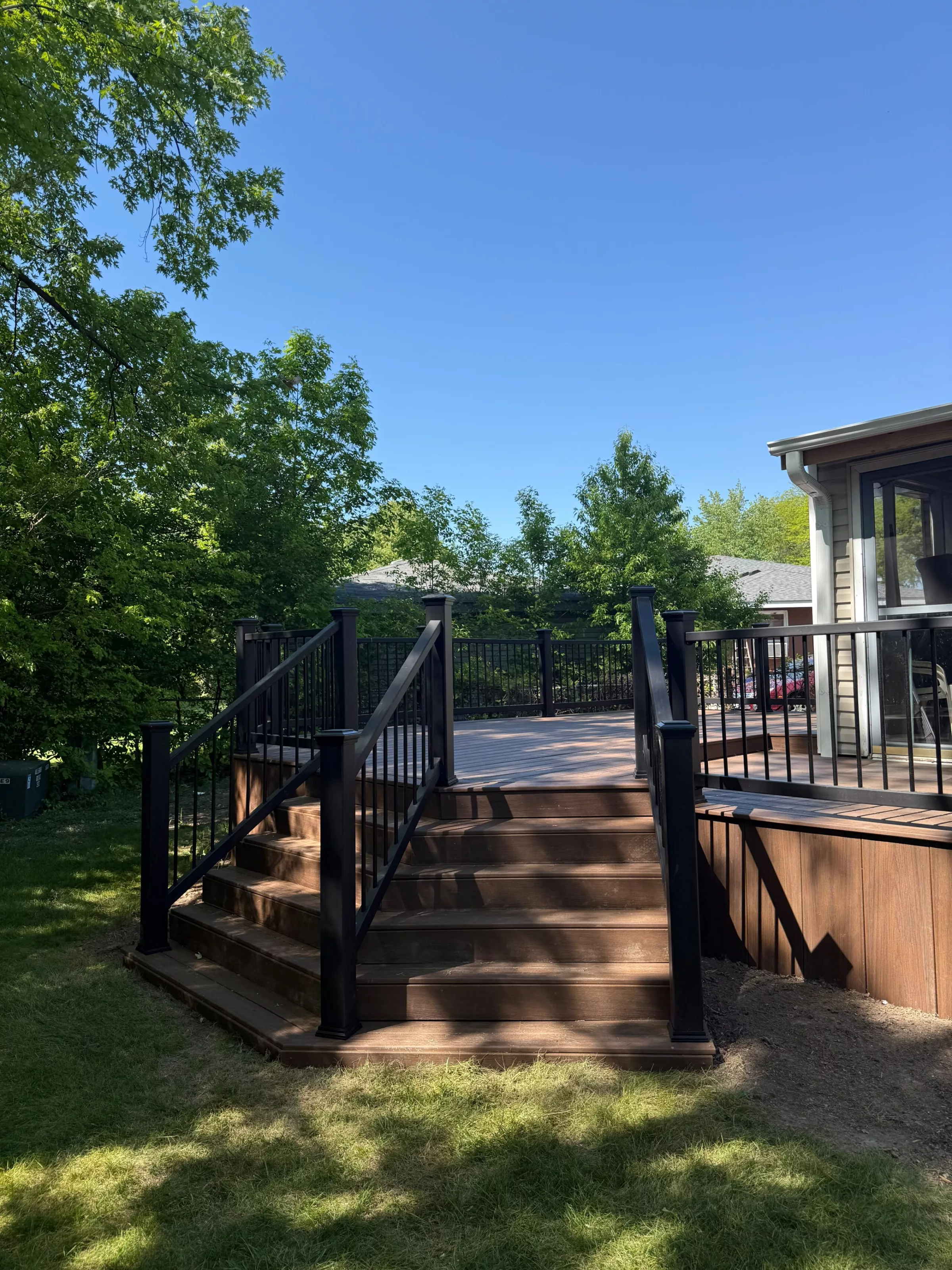
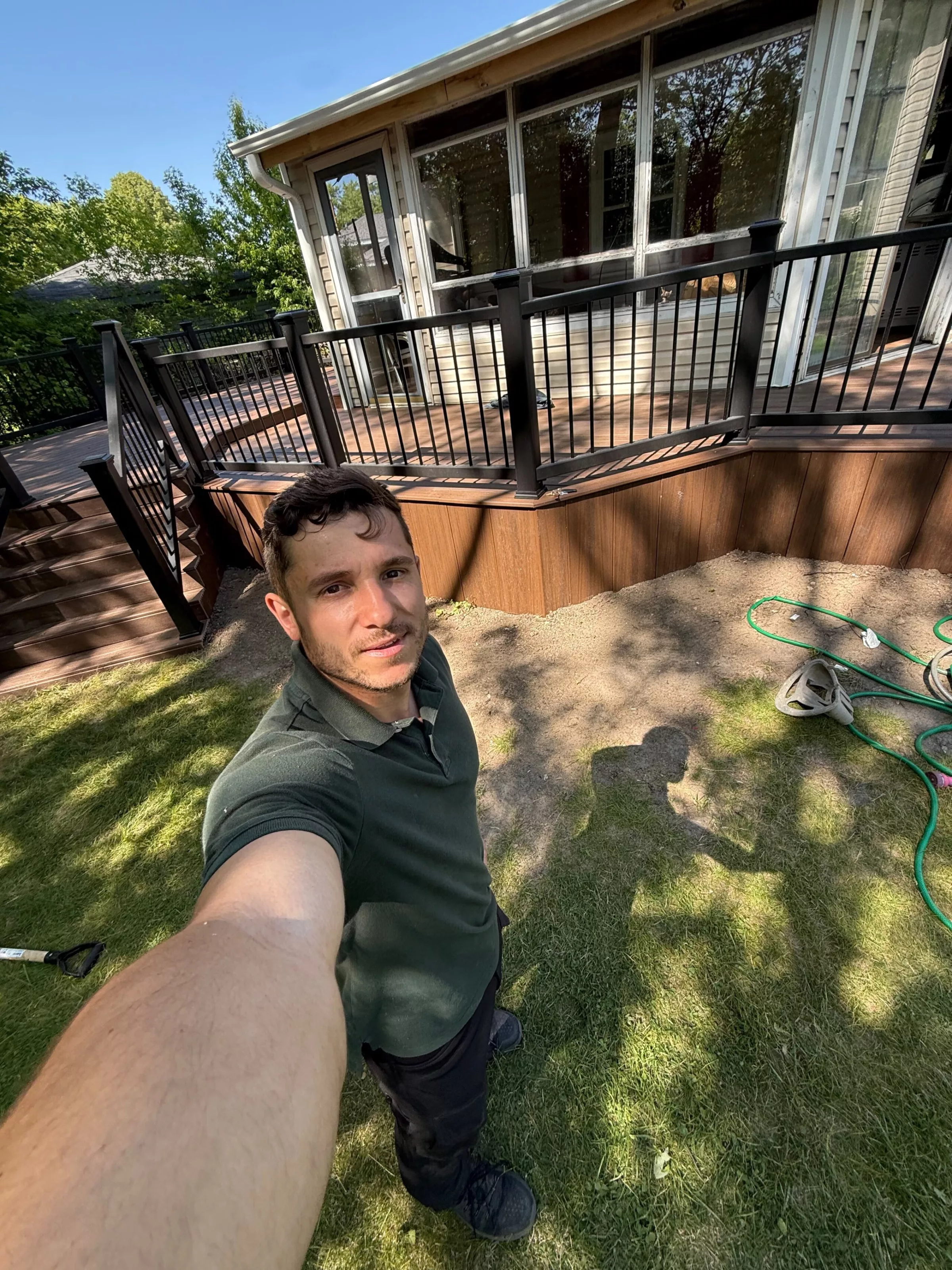
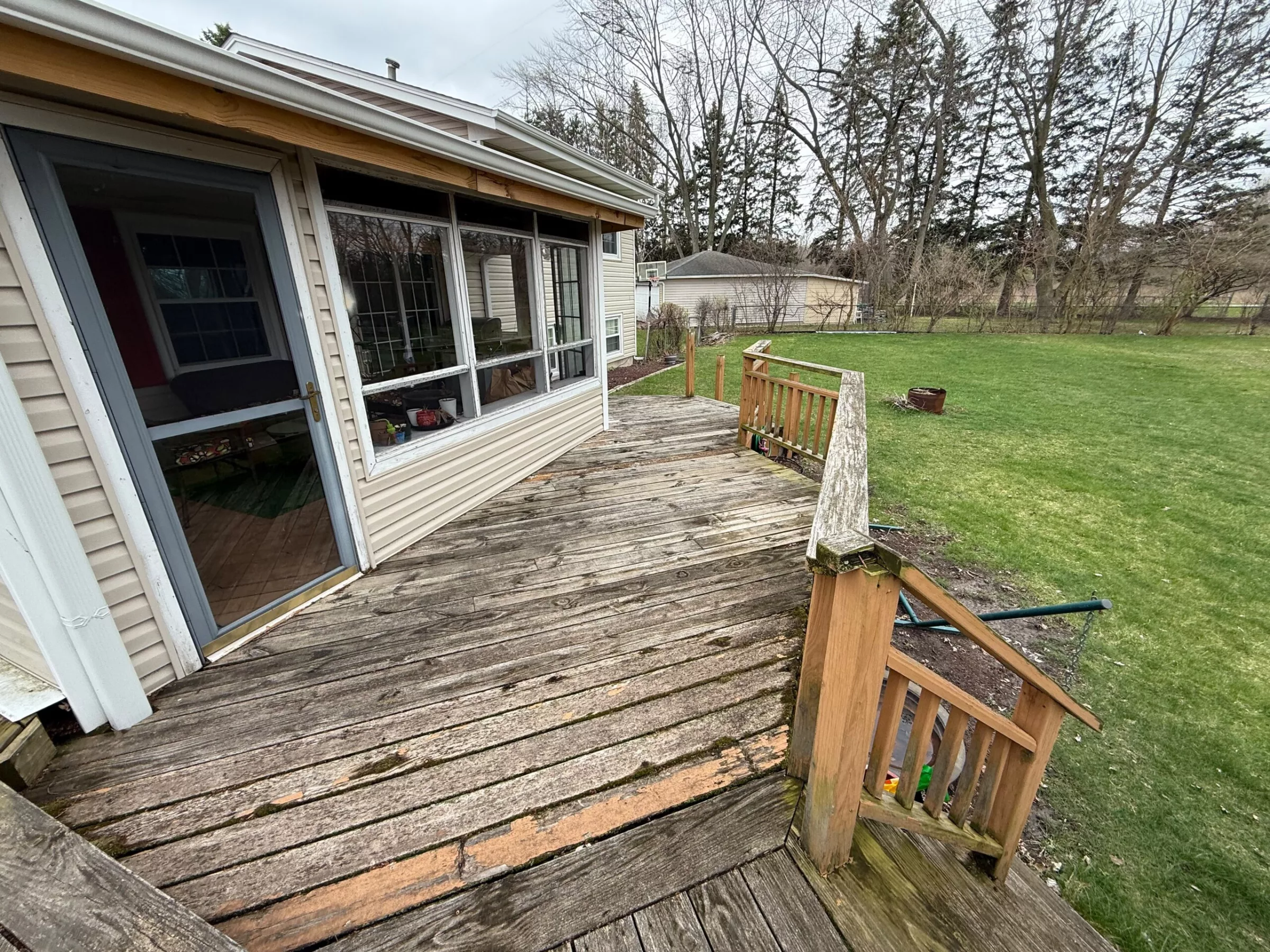
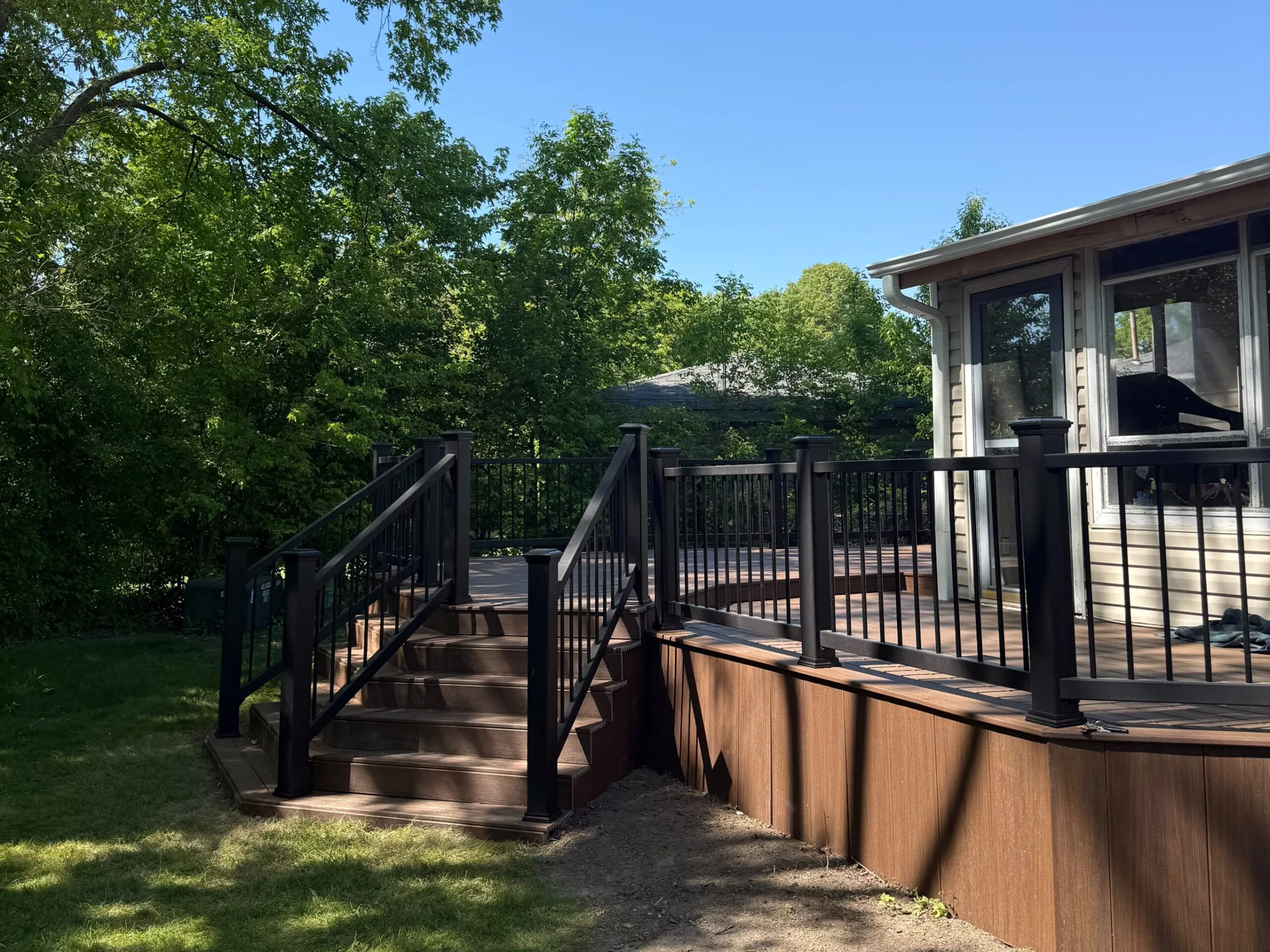
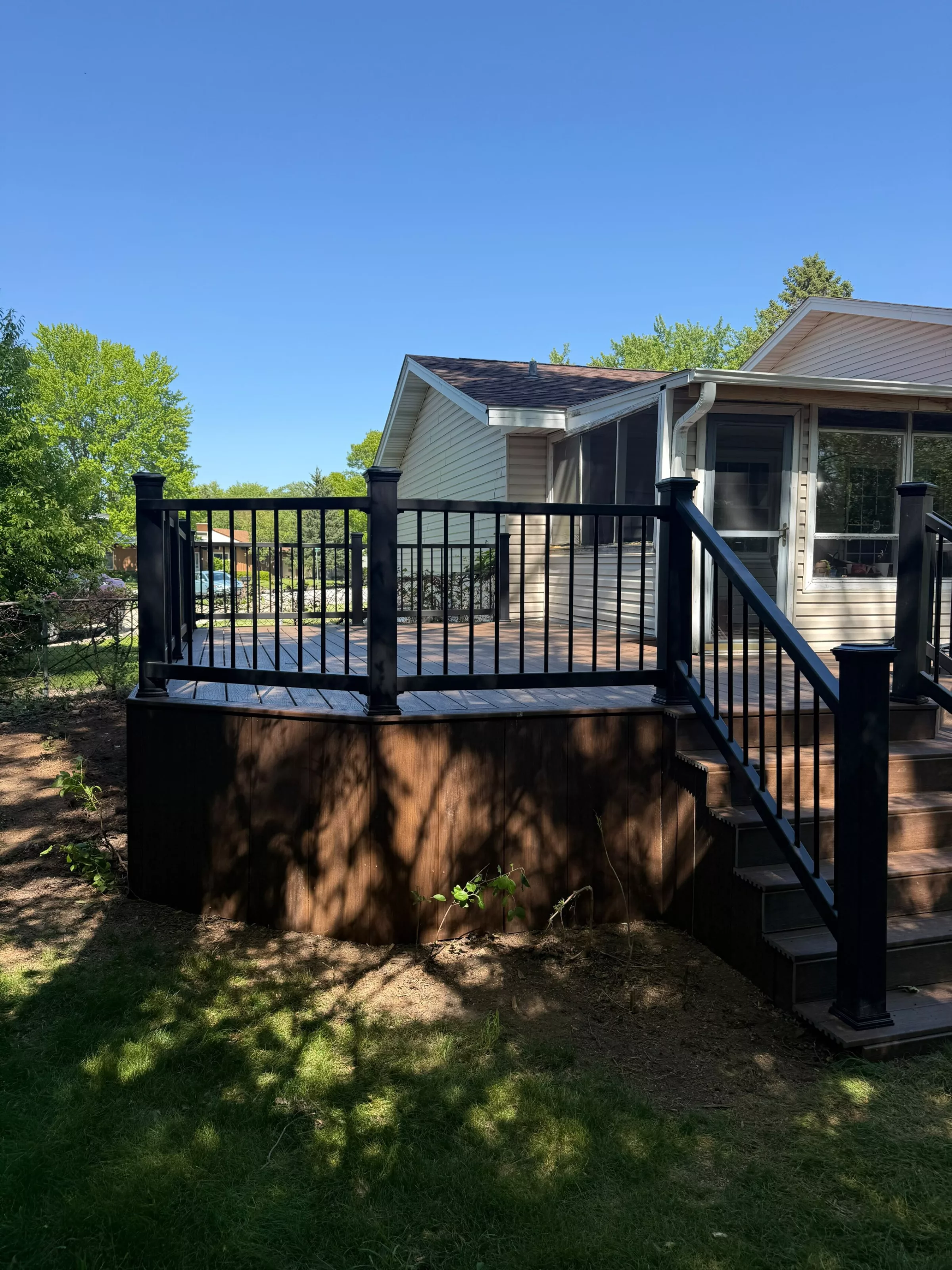
Deck Remodel & Composite Upgrade
Completed: April 2026
Aurora, Illinois View project Read more about Deck Remodel & Composite Upgrade