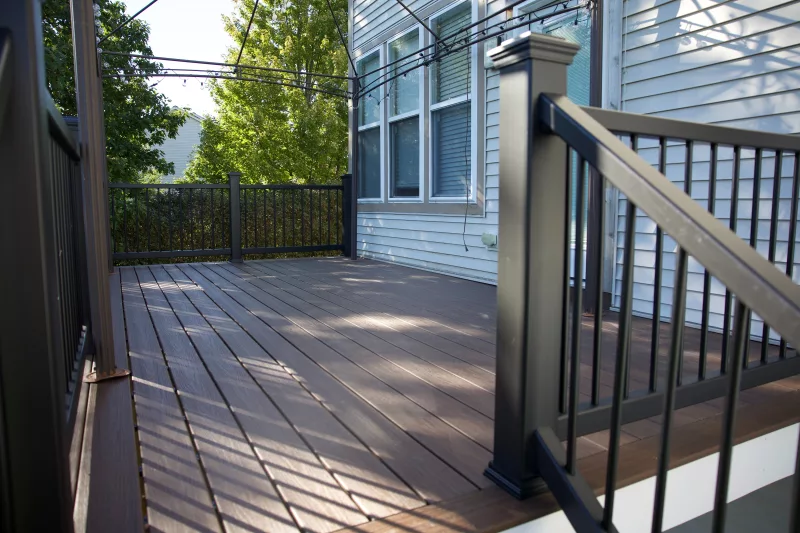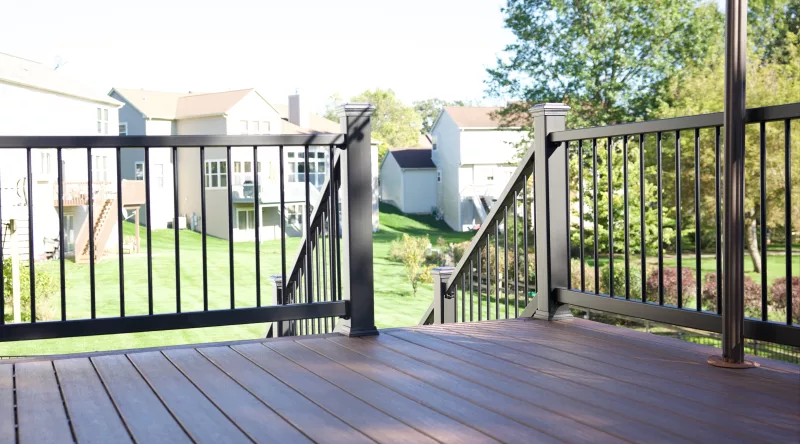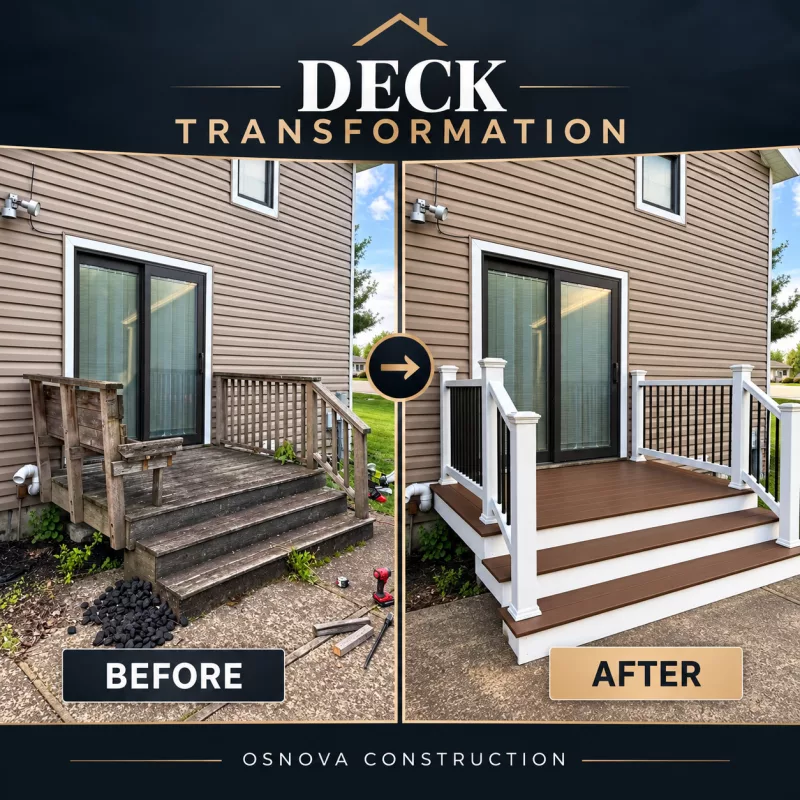
Osnova Construction owner Serhii Yurakh traveled to Kentucky for hands-on training on an advanced metal deck framing system, to learn how it is assembled and how it performs before offering it on Illinois decks. Metal framing replaces the pressure-treated joists and beams under a deck with metal structural members, which are not affected by rot, twisting, shrinking or warping the way wood is.
Great deck building is not only about experience. It also means continuing to learn, testing new construction methods, and understanding the systems that may shape outdoor living in the years ahead. This post covers what the visit looked at and what metal framing could mean for a new deck in the western Chicago suburbs.
What did the training cover?
Seeing a building system in person is very different from reading drawings or product pages. During the visit, Serhii worked directly around the deck structure and examined the main components: beams, joists, support posts, connections, stairs and how the railing ties in. That hands-on time gave a much better picture of how the whole system works together, from the foundation to the finished deck.
The goal was simple: study the system firsthand, understand how it goes together, review its structural parts, and see how this type of construction could be used on future projects.
How is metal framing different from a wood frame?
Most residential decks are framed with pressure-treated lumber. In many towns that is the default the code is written around: the City of Naperville deck guide requires joists, beams, posts and ledger boards to be pressure-treated wood, and says other materials may be acceptable but need prior approval. The American Wood Council's DCA 6, a prescriptive guide to building a deck that meets the residential code, is likewise written for wood decks.
A metal framing system takes a different approach and uses metal members for the main supporting structure. One of its most interesting advantages is long-term stability: metal is not affected by many of the problems that come with moisture, rot, twisting, shrinking or warping. That can make it a good option for homeowners who want a deck structure built to last.
Because it is not the default, a metal-framed deck is built to its manufacturer's instructions and goes through the building department with that documentation. Knowing those details first is part of why the training mattered.
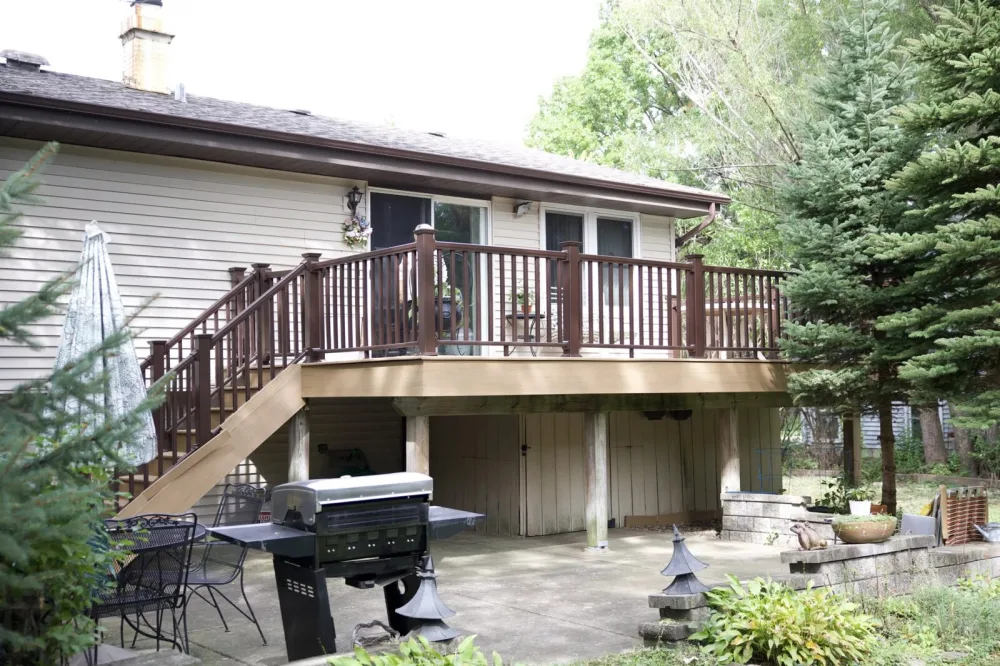
Why does the structure under a deck matter so much?
Homeowners usually focus on what they can see: the decking color, the railing style, the stairs and the overall design. The structure underneath is just as important. During the Kentucky visit the focus was on how the framing is supported, how the structural members connect, how loads move through the system, and how the deck works with different decking surfaces and railing systems.
Wood or metal, the structure still sits on footings. The DCA 6 guide puts deck footings on undisturbed soil below the frost line, and in Naperville that means 42 inches below grade, so the work below ground does not change with the frame material.
Understanding these details helps when evaluating any new construction method. A frame that resists rot protects everything built on top of it, which is the same reason the deck replacement in Bloomingdale started with new framing rather than new boards on the old structure.
Can metal framing work with composite decking and modern railings?
A strong structure is only one part of a good deck. Homeowners also want attractive decking, modern railings, comfortable stairs and a design that suits the house. One area Osnova is exploring is how metal framing works with composite decking and different railing styles, including aluminum and composite railing systems. The goal is to pair long-term structural performance with the clean look people expect from a modern deck. For the railing side of that choice, see composite vs. aluminum deck railings.
Why does professional training matter?
Construction products and building systems keep changing. For Osnova, professional development means going beyond familiar methods and taking the time to understand new materials and technologies before offering them to customers. Trips like this one are a chance to ask questions, inspect connection details, learn the installation requirements, and see how a system performs as a complete structure.
What does this mean for decks in Illinois?
The Kentucky visit was an opportunity to expand knowledge and evaluate another approach to deck construction. Osnova will keep researching new systems, materials and installation methods that may help homeowners in the Chicago suburbs. Not every system is right for every project, which is why understanding several construction options is valuable. The aim stays the same: build better decks, and give homeowners solutions that fit their home, budget and long-term plans.
Questions we hear
Is a metal deck frame more expensive than wood?
Usually the materials cost more than pressure-treated lumber. Whether it is worth it depends on how long you plan to stay and how much the frame's lifespan matters to you; it is a comparison worth making on your own layout.
Can I get metal framing on my next deck?
Ask about it at the estimate. Whether it suits a project depends on the deck, the budget and what the local building department will approve.
For the full sequence from estimate to inspection on any new deck, read what to expect when building a new deck.
Planning a new deck?
If you are considering a new deck, a composite deck or a deck replacement, send us a photo of your yard, and Osnova can help you compare materials, framing options, railings and design ideas before construction begins. You can also request a free estimate through the contact page.