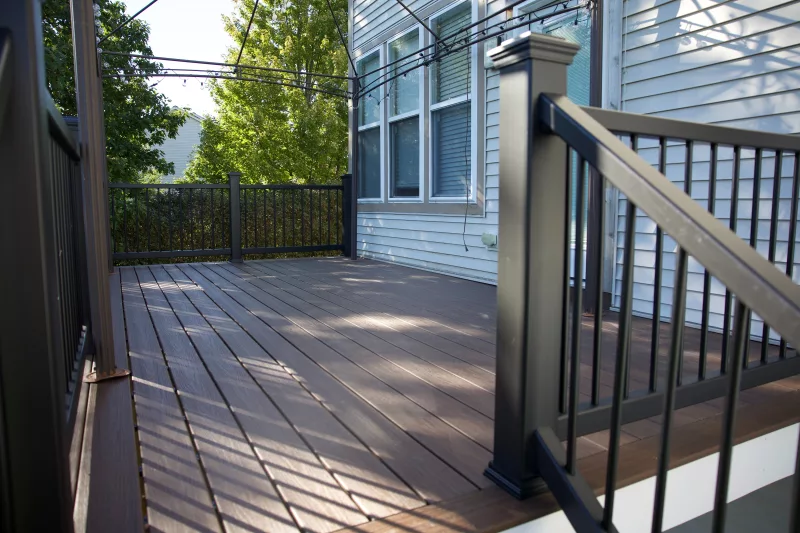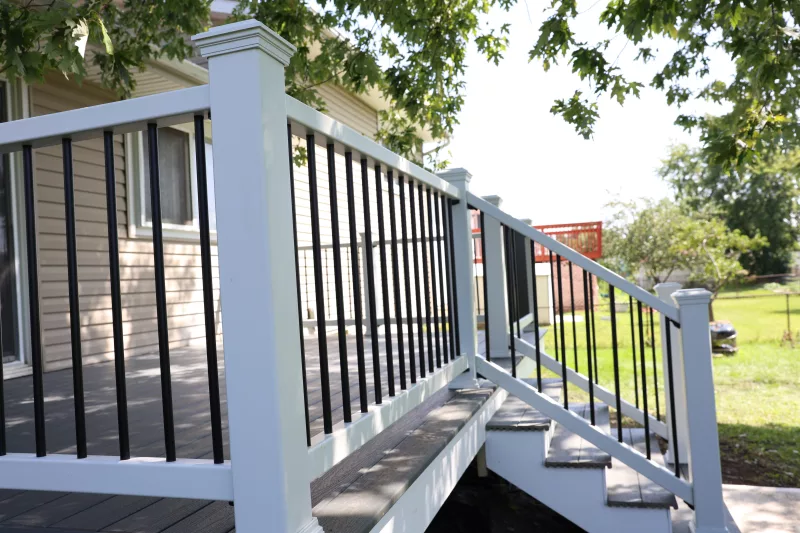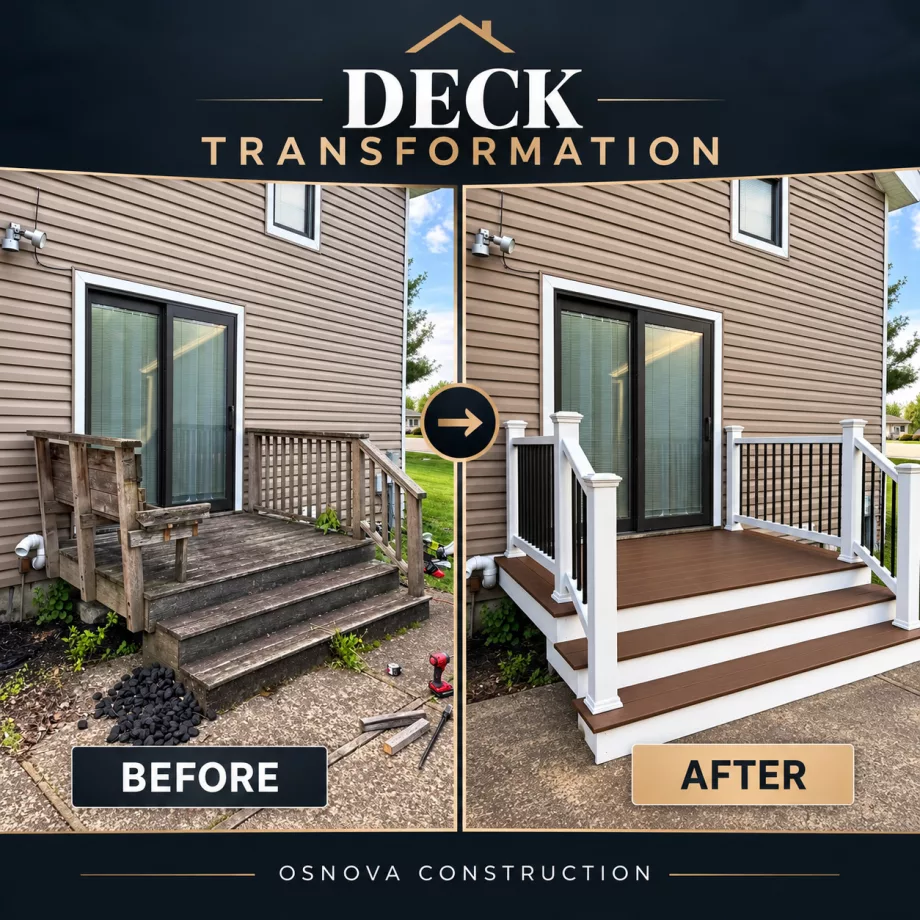
The frame decides. If the posts, beams, joists and the ledger board where the deck meets the house are solid, worn boards, a loose railing or soft stairs are a repair, even when the deck looks tired. If the framing is rotting, the posts have moved or the ledger is pulling away from the house, replacement is usually the safer and cheaper long-term choice, because new boards on a failing frame will not last.
Weather, moisture and everyday use wear every deck down, and the most common question homeowners ask is which side of that line their deck is on. This guide covers the signs to look for, what a deck repair can fix, and when a full deck replacement makes more sense, with three decks Osnova Construction has worked on as examples.
What should you check on an older deck?
The City of Naperville asks homeowners to look over decks, porches and balconies at least twice a year, and lists the signs of an aging structure:
- Split or rotting wood, and loose or missing nails or screws
- Loose or missing anchors where the deck attaches to the house
- Missing, damaged or loose support beams and planking
- Wobbly handrails or guardrails
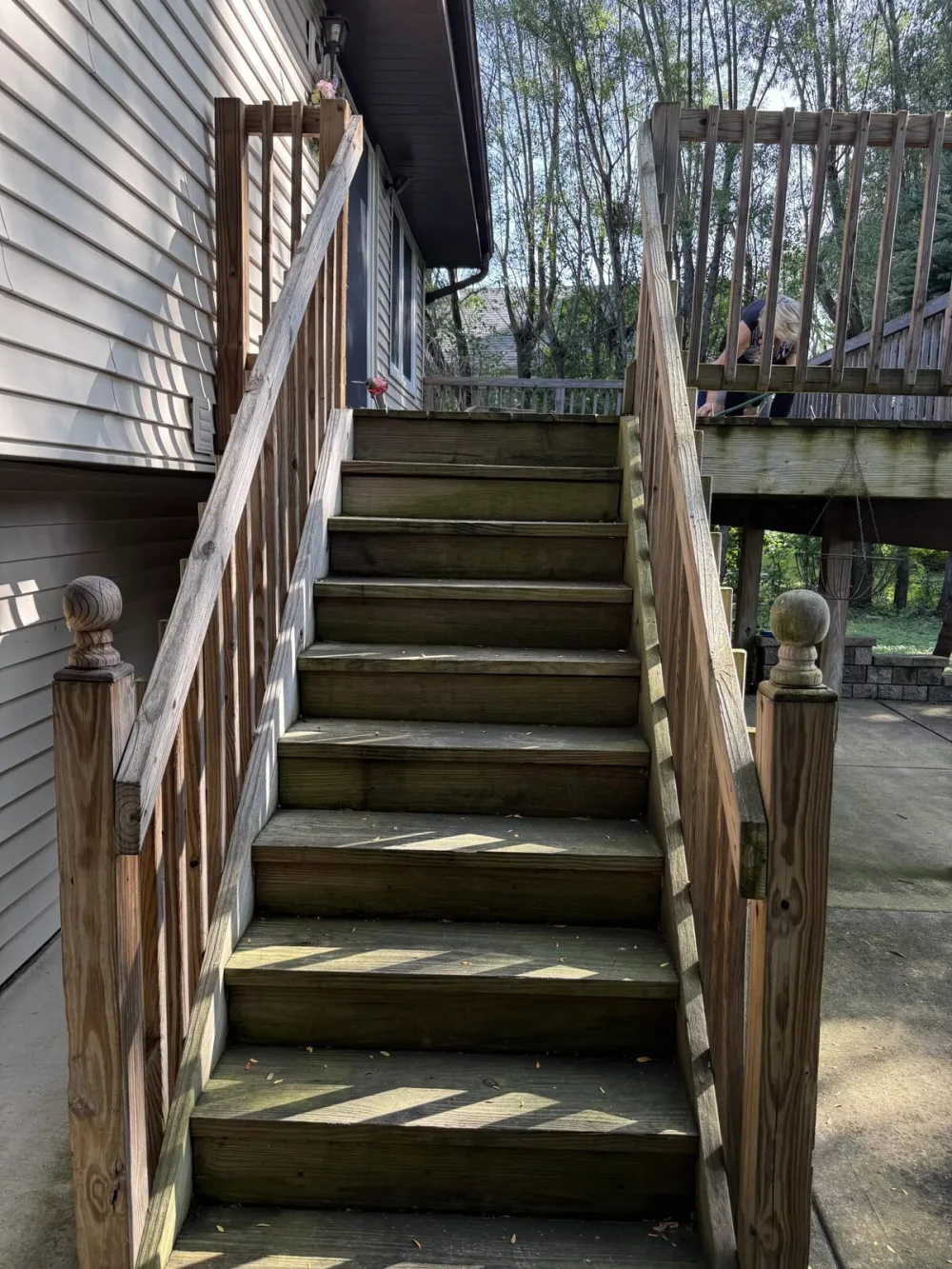
The city adds that if a deck moves when one person walks or jumps on it, or if you have any doubt about its safety, it should be inspected by a professional. Most of what matters is underneath: push a screwdriver into the joist ends and the posts near the ground, and look at the board fastened to the house.
When is a deck repair enough?
Not every damaged deck needs to be rebuilt. If the main structure is strong, repairs are often the best option. Common fixes include:
- Loose or damaged deck boards
- Unstable railings that need re-anchoring
- Small areas of wood rot
- Damaged stairs or stringers
- Individual boards that need replacing
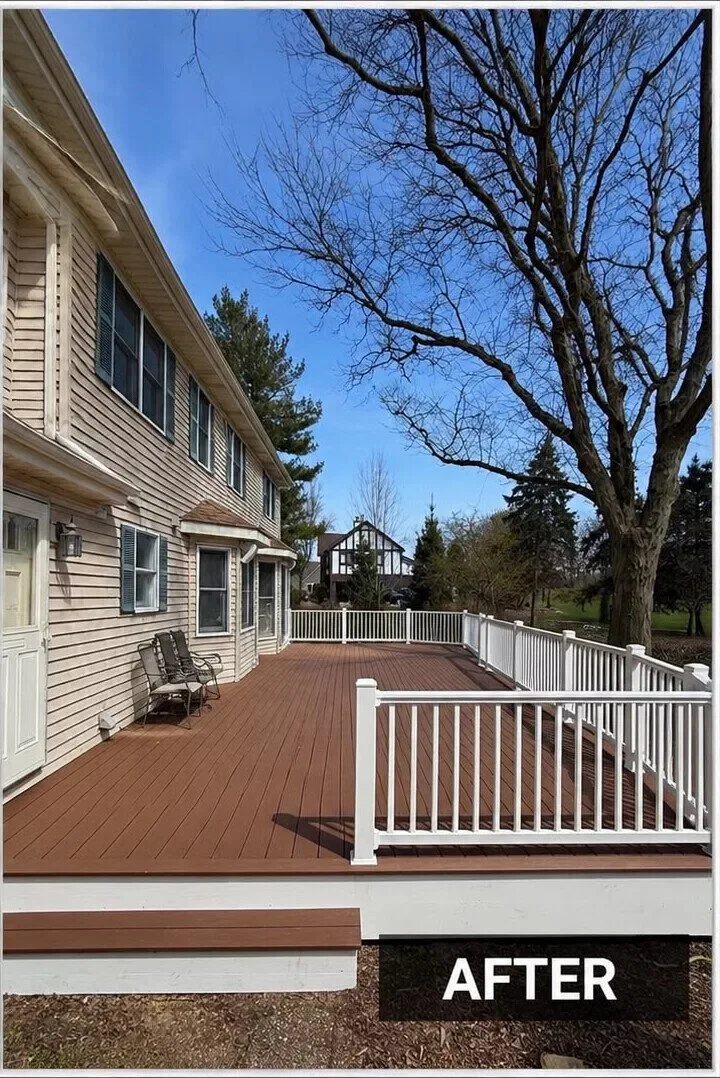
Repairing these spots extends the life of the deck and keeps it safe without the cost of a rebuild. Resurfacing sits in between: the frame stays, and every board and the railing are replaced, often in composite. The composite deck remodel in Aurora kept its frame, which was repaired and reinforced where needed, then got new composite boards, black composite railings, fascia and matching skirting.
When is it time to replace the deck?
Sometimes repairs are no longer enough. Extensive rot, unstable framing, major structural damage, or many areas failing at once usually point to replacement as the safer and more cost-effective choice. An older deck that needs repairs every season also gets more expensive to keep up, and a new deck is a chance to improve the design, update the materials and fit the space to how you use it now.
The deck replacement in Bloomingdale is that case: the old deck was demolished and rebuilt on new pressure-treated framing with Trex decking, Trex railings and new stairs.
Why does the ledger matter so much?
The ledger is the board bolted to the house that carries one side of an attached deck. The American Wood Council deck guide (DCA 6) requires corrosion-resistant flashing over the ledger where it meets a wood-framed wall, so water cannot get behind it. A ledger that was never flashed can rot quietly, along with the house framing behind it, and a deck that pulls away from the house is a structural failure, not a cosmetic one. The same guide puts footings on undisturbed soil below the frost line, which is why posts set on shallow blocks tend to heave and lean over the years.
What if you only find out once the boards come up?
It happens. On the 1,000 sq ft deck in West Chicago, the job started as a resurfacing, but once the old boards came off, several joists had significant rot. They were replaced across the footprint before the new decking, white railings and fascia went on. Building over them would have put a new surface on a failing frame.
Do deck repairs need a permit?
Some do. In Naperville, a permit is required to replace any structural or safety item on an existing deck, including beams and joists, stairs or railings. Swapping a few deck boards is a different matter. Rules vary by village, so check with your building department before structural work starts.
Questions we hear
Can you put composite boards on my old wood frame?
Often, if the frame passes inspection and the joist spacing suits the boards. If the frame is rotten, resurfacing it is money wasted.
How do I know if my railing is just loose or unsafe?
A railing that moves when you lean on it needs attention either way. Usually the post is loose at the rim joist or the wood around the bolts has rotted, and it is re-anchored through solid framing or replaced.
Can you look at photos before coming out?
Yes. Photos of the underside and of where the deck meets the house are the most useful.
The deck replacement page for Bloomingdale shows the local rebuild. If you decide on a new deck, read what to expect when building a new deck, and for the decking choice, how much maintenance Trex composite decking needs.
Not sure what your deck needs?
Send us a photo of the underside and of the spot where the deck meets the house, and Osnova will help you understand your options, whether that is a few repairs or a full replacement. You can also request a free estimate through the contact page.